
Insights
A collection of our recent articles, white papers, webinars, reports and videos.
TAS and BlockInvest sign strategic partnership to accelerate innovation in Digital Assets and Capital Markets

A first use case based on the joint solution is already in the official Pontes pilot phase.
Milan, September, 22, 2026 - TAS, a fintech specializing in software solutions for payments and financial services, and BlockInvest, a leading technological platform in Italy for the tokenization of financial instruments, announce a strategic partnership to integrate their respective expertise and support banks, intermediaries, and market operators in adopting digital assets and on-chain finance models within regulated environments.
The collaboration stems from a shared strategic vision: to generate value organically and structurally, tokenization cannot develop as a standalone ecosystem. Digital instruments must enter the processes through which the market already governs trading, settlement, treasury, liquidity, back office, compliance, and reporting, while preserving operational continuity and control capabilities.
TAS brings over forty years of experience in mission-critical software infrastructure for the financial sector and core banking, expertise in T2-T2S settlement systems, and a modular Capital Markets value proposition covering the lifecycle of financial instruments - from trading to post-trade and compliance. The evolution of TAS's offering also includes the development of capabilities dedicated to the end-to-end orchestration of Digital Asset transactions and access to new digital infrastructures, designed to enable traditional and digital assets to coexist within existing banking processes. BlockInvest contributes specialized capabilities for the structuring, issuance, and on-chain management of tokenized financial instruments and their lifecycle. TAS extends these capabilities into the bank's operational ecosystem, integrating them with trading, post-trade, settlement, payments, liquidity, accounting, compliance, and reporting.
The partnership thus aims to develop a modular offering that can be integrated into existing ecosystems, capable of connecting on-chain asset creation and management with trading and post-trade processes, the cash leg, and settlement infrastructures.
The partnership aligns with TAS's strategy to develop an open and modular ecosystem for Digital Assets, capable of integrating specialized infrastructures and providers into existing banking and Capital Markets processes. Within this framework, the collaboration with BlockInvest brings specialized capabilities in tokenization and on-chain management of digital financial instruments.
The first joint workstream involves Pontes, the Eurosystem's DLT solution designed to connect market DLT platforms and TARGET Services to enable central bank money settlement of DLT-based wholesale transactions.
A first use case based on the TAS - BlockInvest solution is already in the official Pontes pilot phase. Details of the project and the institutional partner involved will be presented through a dedicated event and announcement in the coming weeks.
In this context, the solution combines the management of the asset leg—represented by the digital financial instrument and its on-chain lifecycle—with the orchestration of the cash leg and settlement, treasury, liquidity, reconciliation, and control processes. The offering is targeted at financial institutions and eligible market participants wishing to govern transactions end-to-end, coordinating asset transfers on a market DLT platform with central bank money cash leg settlement.
The project leverages the experience already gained by both companies: TAS in the evolution of TARGET infrastructures and services for commercial and central banks; BlockInvest in institutional tokenization and the lifecycle management of digital financial instruments.
Pontes represents the first concrete collaborative step within a broader roadmap. TAS and BlockInvest will progressively explore use cases related to digital bonds and other tokenized instruments, funds, private markets, securitizations, and corporate actions, along with the corresponding evolutions in post-trade, settlement, treasury, liquidity, collateral, compliance, and reporting processes.
The complementary nature of the two companies makes it possible to address a key market need: enabling traditional and digital assets to coexist within a coherent operating model without duplicating architectures, processes, and control frameworks.
"Digital assets must become a structural component of financial markets, fully integrated into the operational processes and infrastructure that institutions use every day. With BlockInvest, we combine specialized expertise in tokenization and on-chain management with TAS's ability to integrate and orchestrate trading, post-trade, settlement, payments, and liquidity. The entry of the first use case into the Pontes pilot phase brings to life a collaboration designed to govern the entire transaction, connecting digital assets, cash leg, and banking processes into an integrated operating model" stated Salvatore Borgese, CEO of TAS.
"Tokenization reaches its full potential when digital assets can communicate securely with money, banking systems, and market infrastructure. The partnership with TAS combines our technology for structuring, issuing, and managing digital financial instruments on-chain with deep expertise in mission-critical financial processes. The entry of a first use case based on the joint solution into the Pontes pilot phase marks the transition from vision to a concrete institutional project, about which we will soon share more details" stated Lorenzo Rigatti, CEO and co-founder of BlockInvest.
The Digital Euro takes shape: TAS’s vision for supporting banks

The journey towards the Digital Euro has officially entered a decisive phase, marking a major milestone for the entire European financial ecosystem. On 9 July 2026, the European Parliament approved the launch of negotiations with the Council of the European Union on the proposed regulation establishing the new electronic currency to be issued by the European Central Bank (ECB).
Just a few days later, on 14 July, the ECB took another significant step by selecting 36 Banks and Payment Service Providers—from more than 50 applicants—to participate in the long-awaited pilot project. The initiative is scheduled to begin in the second half of 2027 and will run for 12 months.
The primary objective of the pilot is to support the ongoing preparatory work ahead of a potential official issuance of the Digital Euro. During this phase, a beta version of the currency will be tested by thousands of ECB and national central bank employees, who will use it for online transactions, in-store POS payments, and peer-to-peer transfers between individuals.
Against this backdrop, which also involves major international financial institutions, the Italian market has demonstrated remarkable readiness. Of the 36 selected participants, eight are Italian—Isybank, Monte dei Paschi di Siena, Nexi Payments, Numia, Poste Italiane, UniCredit, Satispay and Sella—highlighting the country's strong commitment to payment innovation and its ability to play a leading role in this transformation.
The Digital Euro is designed to complement cash while reducing Europe's reliance on non-EU digital payment schemes, thereby strengthening the continent's strategic autonomy. At the same time, its introduction presents banks with significant operational and strategic challenges but at the same time great opportunities for the pan-European system.
The first major issue concerns the IT investments required to adapt existing systems or build new infrastructures capable of supporting Digital Euro payment services. A second, equally critical challenge relates to liquidity management. Since Digital Euros can also be transferred from customers' traditional bank accounts to their Digital Euro wallets, banks could experience a reduction in deposits, with potential implications for their overall funding base. Finally, another important element of correlation with initiatives related to the digital euro will be the digital identity wallet, introduced with the update of the European eIDAS Regulation to eIDAS 2.0, under which the EU introduced the EUDI Wallet (European Digital Identity Wallet), which each Member State will be required to make available to its citizens.
Indeed, in order to open a “digital euro account” with a PSP selected by the citizen, the EUDI Wallet could provide the certified data and attributes required for a simplified onboarding process.
In this context of profound transformation, TAS positions itself as a strategic partner and technology enabler for the whole financial ecosystem. Our vision is based on a fundamental principle: the Digital Euro should not be managed as a standalone silo. Instead, traditional payment services will need to seamlessly integrate with the new generation of digital asset services.
To address this evolution, TAS has developed a dedicated Digital Asset Management platform that extends well beyond the Digital Euro. The platform features a multi-product, multi-digital-asset hyperwallet and natively integrates stablecoins and other tokenised assets associated with Eurosystem DLT initiatives, including projects such as Pontes and Appia. It provides banks with a high degree of flexibility, enabling them to tailor and deliver the solutions and use cases that best meet the specific business needs of their customers, including retail customers, corporates and SMEs.
By TAS
TAS: A community is born to scale AI

TAS is focusing on an internal community to transform skills, processes, and operating models. From compliance to the knowledge base, through to application development, AI is becoming a widespread and structured workstream.
An internal community spanning across the organization is driving seven development workstreams in the field of artificial intelligence. The objective is twofold: to spread technological culture and skills within the organization and, at the same time, to rapidly bring concrete AI initiatives into execution. "The initiative represents the evolution of TAS Lab, which started in 2023 as an experimental space and has now been transformed into a more structured and widespread community model," says Fabrizio Annatelli, AI Program Lead, alongside Gabriele Paoleschi, from the TAS AI Community. "Adopting AI on a large scale is a journey that involves structure, processes, and above all, the organization. Therefore, we need to bring people on board, support them over time in understanding the technology's potential and risks, and develop new mindsets and skills."
Involving the company's workforce
Hence the explicit focus on reskilling, considered a key lever for managing the transformation. "Not riding the AI wave today means risking falling behind. But it’s not about replacing people: the scope of skills is shifting, as is the way they are utilized," underlines Annatelli. "TAS's response was to directly involve the company's workforce: the community, open to everyone, has seen widespread participation from employees across the company."
The TAS Community
The profiles involved are diverse: from developers to business unit and department managers. Everyone participates in the seven active AI workstreams, directly contributing to project definition and execution. "In this initial phase, we are focused on internal transformation and process efficiency," notes Annatelli. "We have structured pathways, organized into different sessions, to align the community on objectives and build a concrete execution plan. AI is not just an initiative confined to IT; it represents a cross-functional lever that requires organizational coordination and a clear structuring of processes."
The three key workstreams
Among the ongoing projects, three main directions emerge. The first concerns regulations and is among the most complex. "Working with banks and insurance companies," Annatelli premises, "a priority is to strengthen internal compliance safeguards and build a framework that clarifies what can and cannot be done with AI, in light of a continuously evolving regulatory landscape." Alongside compliance, the application development workstream leverages AI to support coding, in compliance with the principles of explainability and ethics. This is a more mature area, partly thanks to the widespread use of AI in software development, where the human-in-the-loop model remains central. However, the most strategic project is the corporate knowledge base. "AI models are generic by nature," highlights Annatelli. "Value is created when they are tailored to the specific context of the company. For this reason, we are building a structured knowledge base that includes regulatory, application, and business content. The knowledge base does not only serve to train models but enables a plurality of use cases: from proactive ticket management to generating analyses, all the way to supporting operational activities. AI agents specialize in specific tasks but do not make autonomous decisions: the responsibility always remains with humans."
From experimentation to industrialization
The community has already brought several workstreams into the execution phase and is preparing for an advanced training phase, particularly on the knowledge base. "We are structuring the system to ensure localized data governance for critical content. For the most sensitive use cases, a dedicated LLM infrastructure based on open-weight models is being trialed, with an initial summary expected by May," says Gabriele Paoleschi. "This allows us to securely manage large volumes of critical documentation. Another key element is the evolution of the operating model: no more rigid technological constraints, but adaptive processes, because AI evolves too quickly to be locked into static architectures. We need a dynamic approach capable of continuously updating itself, also in line with regulatory developments."
The first Use Cases: Between Electronic Payments and T+1 Settlement
Alongside the main workstreams, TAS is developing vertical applications, particularly in the electronic payments sector. Predictive artificial intelligence is already being used for transaction monitoring in fraud prevention using mature techniques. Generative AI enables a broader scope of applications: from the corporate knowledge base to decision support for T+1 settlement, from an advanced GUI design framework for banking applications to advanced reporting systems based on natural language. "A concrete case concerns the transition to the T+1 regulation, which reduces financial transaction settlement times to one day," explains Paoleschi. "We have developed proofs of concept to support matching and reconciliation activities, which are increasingly critical today due to shortened timelines, and here AI provides decision support by intercepting anomalies and suggesting possible corrective actions."
A look at the market
Finally, TAS continues to closely monitor market developments to integrate AI into its offerings in a way that aligns with customer needs. "We are in a phase of continuous scouting," concludes Annatelli. "AI is evolving rapidly and requires a pragmatic approach to be integrated into the business at scale. It is not a vertical technology, but a cross-functional capability that must be structured and governed."
English version by TAS
Original article from AziendaBanca by G.C. : https://www.aziendabanca.it/notizie/tecno/tas-nasce-la-community-per-scalare-ai
T+1: From Regulatory Requirement to Operational Transformation Driver

During the event “T+1: Implementation Has Begun”, Bancaforte spoke with David Mogini, Head of Capital Markets Business Unit at TAS, about the impact the new regulation will have on banks, market participants and the broader financial ecosystem, as well as the solutions that can turn compliance into a strategic opportunity.
Mr. Mogini, which processes will be most affected by the new regulation?
The transition to T+1 represents a significant shift in the post-trade operating model. It is not simply a matter of shortening the settlement cycle; it requires a fundamental rethink of the entire value chain.
The areas most affected are matching and confirmation, which must now be completed on the trade date (T), settlement, which requires more dynamic management of instructions, fails and partial settlements, and liquidity management, which becomes intraday and highly time-critical.
In addition, there is a growing need for integration with corporate actions, which are becoming increasingly interdependent with the settlement cycle. Interactions among these processes are now intraday and tightly interconnected: errors or delays upstream are immediately propagated across the entire processing chain.
How do you support clients in managing liquidity and the broader operational impacts?
Our approach is based on the understanding that T+1 is not simply about accelerating processes—it is about managing greater complexity.
Solutions must provide an integrated view of liquidity across both central bank and commercial bank money, granular monitoring of market- and counterparty-specific cut-off times, and intraday forecasting capabilities. These are complemented by auto-funding functionalities, automated matching and proactive exception management.
Many of these capabilities already exist, but they must be redesigned to operate in real time and in a coordinated manner. From an architectural perspective, we are evolving towards event-driven and streaming-based models that enable real-time data processing and move beyond traditional batch-oriented approaches.
At the core of this transformation is the introduction of end-to-end orchestration mechanisms, enabling continuous monitoring, intelligent exception handling and intervention prioritization. The objective is to make the post-trade value chain more seamless, integrated and responsive—not only to monitor operations, but also to support timely and effective decision-making.
What challenges are you encountering? Are banks ready?
The main challenges are not purely technological; they are also operational and organizational.
From a technology standpoint, system fragmentation remains a major issue. Current architectures were designed around separate domains and sequential processes, whereas T+1 requires real-time coordination across highly interdependent workflows spanning multiple business areas. Coordination does not necessarily mean that all processes must be managed through a single platform; rather, organizations need tools that provide a unified and integrated operational view.
A second challenge is exception management. What was traditionally handled overnight must now be addressed intraday, requiring higher levels of automation, alerting capabilities and robust Data Quality Management from the earliest stages of trade capture. This includes bringing data enrichment activities forward into the matching phase—for example, the early identification of the Place of Settlement.
Finally, there is the organizational dimension. T+1 demands closer collaboration between business and IT teams to design intelligent, automated processes, while also redefining the boundaries between middle-office and back-office functions.
The real question is not whether banks are ready, but whether their operating models are designed to function in real time. In many cases, the answer is still no. However, the entire ecosystem is moving rapidly in this direction.
In this context, we believe market participants should embrace the principle of “zero additional people”, leveraging automation, Straight-Through Processing (STP) and rule- and AI-driven decision-making models.
Institutions that can effectively orchestrate matching, settlement, corporate actions and liquidity processes will be able to turn T+1 into a competitive advantage, improving productivity while reducing the overall cost to serve.
English version by TAS
Original article from Bancaforte
Salvatore Borgese appointed new CEO of TAS
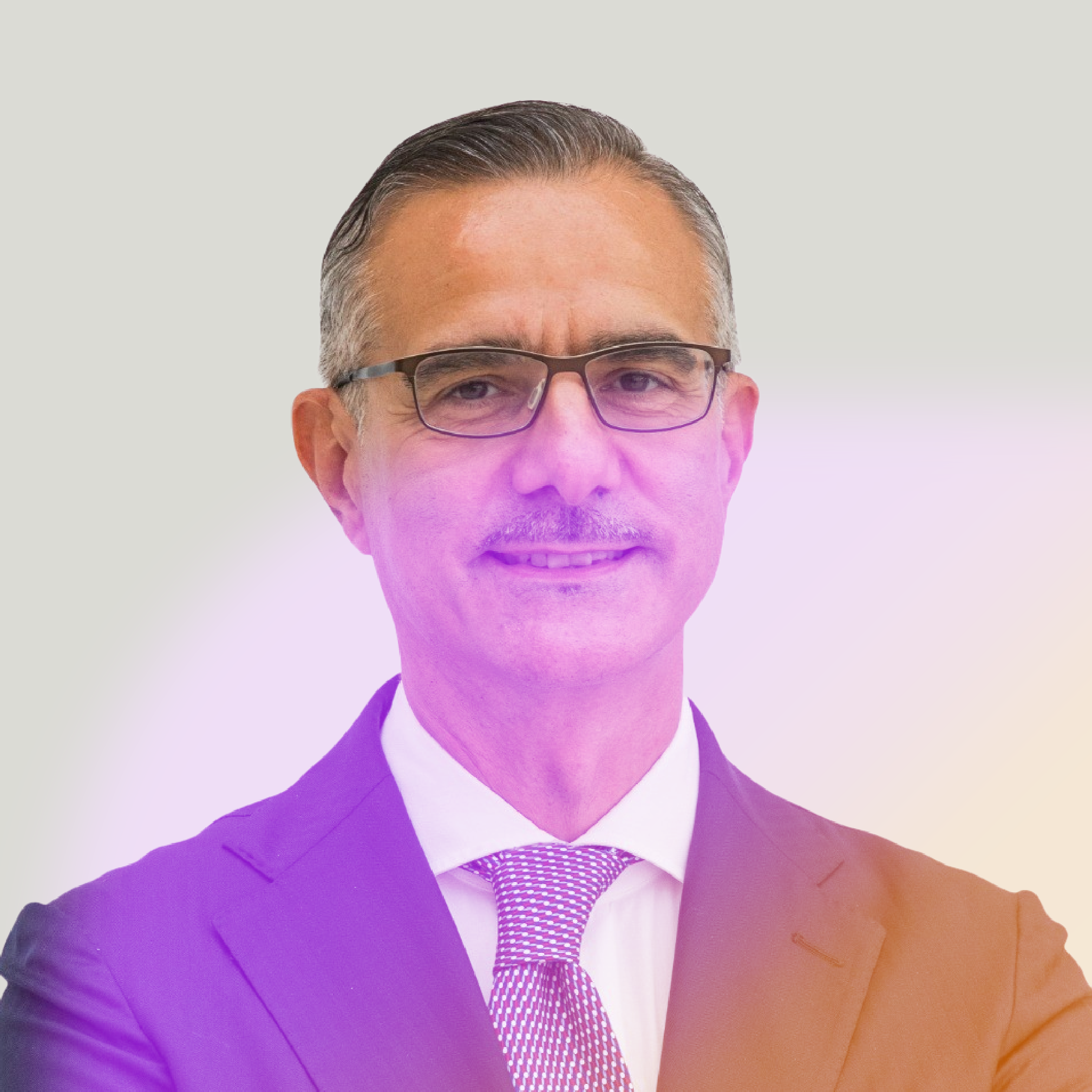
Milan, March, 16, 2026 - TAS Group, a leading international developer of software solutions for payments, e-money, and financial markets, announces the appointment of Salvatore Borgese as Chief Executive Officer. This appointment marks a strategic evolution for TAS, which aims to consolidate its global leadership in the digital payments and financial services sector by combining operational continuity with a decisive push towards technological innovation.
Salvatore Borgese succeeds Valentino Bravi, who has led the company over the past 15 years through a fundamental financial recovery and profound modernization of its core platforms, positioning TAS as a benchmark in the European banking software ecosystem and technological innovation.
With a view to continuity and a long-term vision, Valentino Bravi will accompany the transition by remaining an investor in the Group alongside Rivean Capital.
The arrival of Salvatore Borgese brings to TAS a wealth of high-level expertise, gained during a long career at the top of leading Italian and pan-European payment system companies. Salvatore Borgese has over 30 years of experience in the financial sector, with a career focused on developing strategies with a strong focus on technological innovation. After starting out at Banca CRT (now UniCredit), he held senior positions at NTT DATA (formerly Value Team), the Nexi Group (formerly ICBPI), and Intesa Sanpaolo, where he was General Manager of Banca 5 and subsequently General Manager and Chief Commercial Officer of Mooney. He has also held institutional roles in the payments industry, including board member of EPC, Bancomat, and CBI, Vice President of APSP - Payment Service Provider Association, and is currently a lecturer at the Catholic University of the Sacred Heart and a member of the CeTIF board - Banking Division.
The new CEO's vision, focused on the integration of banking services and digital platforms, aligns perfectly with TAS's ambition to accelerate the migration of financial institutions to cutting-edge cloud infrastructures and SaaS models, while ensuring the solidity that has allowed the Group to currently manage over 100 million payment cards and solutions of fundamental importance for the Eurosystem and the core banking systems of major Italian and European banks.
TAS Group Chairman Fabio Benasso said: "We are thrilled to welcome Salvatore Borgese to the helm of TAS. His pioneering vision in digital payments and in-depth knowledge of hybrid banking services are the ideal assets to lead the Group to new heights. Special thanks go to Valentino Bravi for leading TAS with a strategic vision that has ensured solidity and consistent growth in recent years."
Giuseppe Franze, Partner at Rivean Capital, the investment fund that holds a majority stake in the TAS Group, commented: "The arrival of Salvatore Borgese, supported by his deep experience in the fintech sector, represents a guarantee of strategic continuity and ambition for us. TAS today represents a leading technological excellence on the international scene, and we are confident that, under his leadership, it will consolidate its position as a preferred partner for financial institutions. I would like to express my deep gratitude to Valentino Bravi for the extraordinary work he has done and for the value he has created at TAS over the years. I am also happy to continue working alongside him, sharing his vision and commitment to supporting the Group's future development."
Valentino Bravi emphasized the significance of the handover: "I am leaving the operational leadership of TAS with the pride of having helped transform this company into a solid and recognized international player. The handover to Salvatore Borgese is a choice of continuity and perspective, designed to ensure the Group's sustainable and ambitious development over the next decade. I will continue to support TAS as a shareholder and as a member of the Board of Directors, alongside Rivean, providing my experience and strategic vision. Founded over 40 years ago and present in key European markets, TAS, with the arrival of Salvatore Borgese, is preparing to write a new chapter focused on the scalability of its solutions and strengthening its presence in high-potential European markets, confirming its position as a leading technology partner in the digital transformation of the global financial sector."
"I am delighted and proud to be part of an organization of absolute excellence and international standing like TAS, where I can continue the experience gained over the years in the financial services sector, which has undergone radical changes driven by technological innovation," said Salvatore Borgese, the new CEO of TAS. "I believe one of the most important challenges we must overcome immediately is to increasingly organically integrate high-impact innovative models such as AI and new products in the Digital Assets area into our operations, ensuring that these developments can generate value for the future of TAS and its clients."
TAS announces the appointment of David Mogini as the new Head of the Capital Markets Business Unit

Milan, September, 2025 - TAS SpA (hereinafter "TAS"), a leading company in the supply of software and services for banking and financial applications, in Europe and the Americas, announces the entry of David Mogini as Head of the Capital Markets Business Unit.
With over 30 years of experience gained in leading international consulting firms and in the banking sector, David Mogini brings to TAS an in-depth knowledge of the financial market and its main business areas: capital markets, commercial and transaction banking, wealth and asset management.
Throughout his career, he has led major transformation and innovation programs for prominent players in the financial sector in Italy and abroad, focusing on strategy, operations, digital & IT transformation, and open banking.
Thanks to his strategic vision, ability to build strong relationships, and strong innovation mindset, David will support TAS in expanding its Capital Markets offering, further strengthening the company’s role as a key technology partner for the industry.
Worldpay and TAS together to simplify and enhance the competitiveness of pagoPA Payments
Milan – February, 27 2025 Worldpay, a global leader in payment solutions with a presence in 146 countries and the processing of over 50 billion transactions annually, and TAS, an Italian ICT company specializing in payment systems and transaction processing, announce a new partnership to simplify and broaden access to digital payments to the Public Administration.
A strategic partnership to offer merchants a turnkey solution for integrating pagoPA payments into their applications, thereby expanding opportunities for citizens and businesses.
The integration of Worldpay’s acquiring and processing solutions with TAS’s PayTAS platform enables merchants, app developers, and payment service operators to join the pagoPA network and easily offer the collection and payment functionalities of pagoPA, without the need to develop complex infrastructures. Already adopted by numerous banks, payment institutions, and many prominent public entities and creditors, PayTAS is a platform that streamlines the collection process and digitizes payments to the Public Administration and other entities participating in the pagoPA system. It facilitates connection to this system, both as a Technology Partner and as a Payment Service Provider (PSP).
“The collaboration with Worldpay allows us to extend the value of PayTAS and offer, even to third-party operators, a turnkey solution for pagoPA payments that can be easily integrated on online channels, physical networks, mobile devices, and state-of-the-art physical POS systems. With Worldpay, we are also working on introducing innovative payment processes and tools,” said Stefano Macchi, Technical Sales Representative at TAS.
“Thanks to this integration, anyone wishing to offer payments within the pagoPA network will be able to do so simply and without technical complexities, thereby expanding the available channels for citizens and businesses while ensuring competitive rates”.“Working with TAS and pagoPA is an important milestone, as it makes Worldpay part of the change and innovation in digital payments to the Public Administration. The advanced security and speed of transactions ensure a smooth and satisfying payment experience, affirming the cutting edge of our payment solutions.”— Phil Brown, Country Manager Italy and Malta, Worldpay.
TAS Achieves UNI/PdR 125:2022 Certification

Milan – December, 18 2024 – We are pleased to announce that TAS S.p.A., a leading provider of software and services for banking and financial applications in Italy, has obtained the UNI/PdR 125:2022 certification, recognizing TAS group’s commitment to workplace gender equality.
This certification marks a significant step toward creating an inclusive, equitable, and discrimination-free work environment where every individual, regardless of gender, has equal opportunities for growth and success.
The UNI/PdR 125:2022 certification, which provides guidelines for gender equality management systems, is a crucial tool for addressing the gender gap in the labor market. It promotes practices that foster a climate of inclusion, respect, and appreciation for diversity.
Valentino Bravi, CEO of TAS, commented: “This certification is not just a symbol of our company’s commitment; it represents a tangible act of social responsibility. Every employee, regardless of gender, has the right to fully express their potential, contributing to collective success. Our vision is to continually improve by providing a work environment where equality, employee empowerment, and mutual respect are at the core of everything we do.”
“Our journey does not stop here,” added Guido Isani, HR Director of TAS. “We will continue to monitor and enhance our policies and goals to ensure an increasingly inclusive workplace where gender equality is not just formal but a daily reality. Achieving this certification inspires us to carry on our mission with enthusiasm: promoting equality and inclusivity while contributing to building a conscious society.”
This recognition is the result of teamwork and the unwavering dedication of all TAS employees.
TAS Iberia is launching the R&D&I PIELSEN project to develop a 3D homeostatic enveloping architecture

TAS Iberia is launching the R&D&I PIELSEN project, which will develop a 3D homeostatic enveloping architecture to create a sensitive, intelligent, adaptive, and safe skin for building facades.
The body's ability to self-regulate to maintain internal balance in response to changes in the external environment is known as homeostasis. Human skin is a complex system that regulates the exchanges that occur between the internal organism and the external environment, whether they are thermal, acoustic, tactile, etc. As aids to this homeostasis, clothing and architecture must compensate for any differential that causes biological imbalance.
In this way, architecture is conceived as the human response to the aggressive factors of the environment in order to create conditions that make inhabiting a territory possible. The facades' envelopes are designed to fulfill a role similar to that of skin. They must always be designed to provide a coordinated response through interconnection with the rest of the building system’s components, generating an interstitial space between elements that can be understood as a homeostatic skin, reacting according to its environment and preserving the interior conditions of the dwellings, thus ensuring the habitability and health of the occupants.
From this premise comes the R&D&I project "PIELSEN: 3D Homeostatic Enveloping Architecture to create sensitive, intelligent, and adaptive skin for building facades," funded by the Ministry of Science, Innovation, and Universities under the 2017 Retos-Colaboración call. TAS Iberia, a leader in software, financial services, and sectors requiring a high level of communication and network security, has excellence partners including: FCC Construcción; Camilo José Cela University; and the Polytechnic University of Madrid through the Energy Efficiency and Internet of Things group of the Comprehensive Domotics Center (CeDInt-UPM). The project is expected to be developed over 36 months (2018-2020).
The PIELSEN System provides a new architectural element that is technically and economically viable, developed with a concept between bioclimatic architecture and Smart building. This is highly sought after today by a society increasingly aware of environmental issues, sustainability, and nature, leading to the development of solutions not only in the field of architecture and construction but also advancements related to their impact on health, well-being, the environment, energy resources, and technological innovation.
The goal is to create a skin, pores, and folds for buildings that can even generate their own energy (solar, wind, electrostatic, wind, piezoelectric...), integrating as a smart and innovative construction solution aimed at a market that reduces costs for end consumers, increases the use of clean energy, and focuses on studying the following innovations.
The research project aims to develop cutting-edge technological topics with future projection, including: cryptosystem security, closed blockchain, IoT systems based on SOA architectures, embedded devices, new sensors and biometric systems, environmental monitoring, FPGA RF/5G/IP, cloud control with Artificial Intelligence systems (AI, Machine Learning & Deep Learning), smart envelopes, Smart Cities, and Smart Building.
Contact us
Get in touch to discover how we can help in achieving your business goals